
Liposuction and lipofilling
Liposuction is an operation to remove excess subcutaneous fat, allowing body contours to be refined in problem areas. Several techniques exist — classic, laser, ultrasonic, and electronic lipo-modeling — and the choice of a specific method depends on the volume of fat deposits and the characteristics of the tissues. One of the most common variants is abdominal liposuction. If needed, the fat obtained during the procedure can be used for fat grafting — restoring volume in other areas of the body.
The incisions used for the procedure usually do not exceed half a centimeter in length, so healing is quick and barely noticeable. Before the work begins, Klein solution is injected into the fat deposits — a "cocktail" of saline, lidocaine, and adrenaline: the fat cells swell and become softer, while the blood vessels constrict at the same time, allowing the fat to be broken down with minimal blood loss.
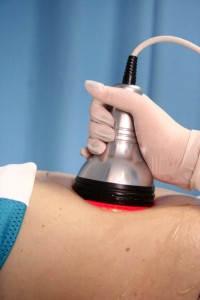
With ultrasonic liposuction, the fat cells are broken down by ultrasonic cavitation — they "burst" and turn into a liquid emulsion. The traditional technique involves suctioning out this emulsion through the incisions, while the non-invasive one involves the natural elimination of fat through the lymphatic system, without compromising skin integrity.
Who it suits and when to wait
- Localized excess subcutaneous fat that is resistant to diet and exercise
- Excess fat deposits in the abdominal area — one of the most frequently corrected zones
- A wish to refine body contours in problem areas
- The need to harvest one's own fat for subsequent fat grafting and volume restoration in another area
- A preference for a gentle technique that does not compromise skin integrity — suited to non-invasive ultrasonic liposuction
- A wish to minimize blood loss and the invasiveness of the procedure through the injection of Klein solution beforehand
- Pregnancy and breastfeeding
- Blood clotting disorders
- Acute infectious and inflammatory diseases
- Severe chronic diseases of the cardiovascular, endocrine, or respiratory systems in an acute stage
- Individual intolerance to the anesthesia components used when injecting Klein solution (including lidocaine)
- Cancer
How it works in practice
Ultrasonic liposuction
The fat cells are broken down by ultrasonic cavitation and removed through incisions up to 5 mm — the method is minimally traumatic and suited to precise correction of problem areas.
Treatment areas
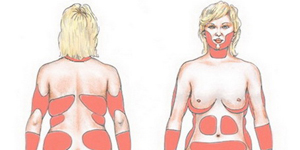
Liposuction is most often used in areas where fat deposits respond worst to diet and exercise — the abdomen, flanks, back, thighs, chin, and arms.
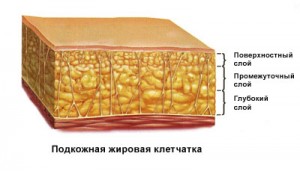
Layers of subcutaneous fat
Fatty tissue is arranged in several layers — superficial, intermediate, and deep. The surgeon precisely calculates from which layer and in what volume to remove fat so that the skin surface remains smooth.
From consultation to result
Consultation and choosing the technique
The surgeon assesses the volume and location of fat deposits and determines the appropriate method — classic, laser, or ultrasonic liposuction, or electronic lipo-modeling.
Injecting Klein solution
A "cocktail" of saline, lidocaine, and adrenaline is injected into the fat deposits: the fat cells swell and soften, while the blood vessels constrict, reducing blood loss during the subsequent breakdown of fat.
Breaking down and removing the fat
Through incisions no longer than half a centimeter, the fat is broken down — with the ultrasonic technique, through cavitation — and removed: traditionally the emulsion is suctioned out through the incisions, while in the non-invasive variant the fat is eliminated through the lymphatic system without compromising skin integrity.
Completing the operation and compression garment
A compression garment is put on the treated area; with classic liposuction the patient stays at the clinic for 1-2 days, while with the laser technique discharge on the day of surgery is possible.
How recovery unfolds
Procedure pricing
The exact cost is set at the consultation after an examination and depends on the scope of the procedure.
Results — Liposuction and lipofilling
FAQ about Liposuction and lipofilling
With classic liposuction, fat is broken down mechanically through incisions, and 1-2 days at the clinic are needed after surgery. The laser technique is easier to tolerate — discharge is possible on the very day of the operation.
It is a "cocktail" of saline, lidocaine, and adrenaline that is injected into the fat deposits before the procedure. It makes the fat cells swell and soften while the blood vessels constrict, allowing the fat to be broken down with minimal blood loss.
The fat cells undergo ultrasonic cavitation — under its effect they "burst" and turn into a liquid emulsion. Two options are then possible: the traditional one, where the emulsion is suctioned out through incisions, and the non-invasive one, where the fat is naturally eliminated through the lymphatic system without compromising skin integrity.
The incisions used for the procedure usually do not exceed half a centimeter in length, so no noticeable scars remain and healing is quick.
Abdominal liposuction is one of the most common, although the technique is also used for other areas with excess subcutaneous fat.
This depends on the technique: classic liposuction requires a 1-2 day stay at the clinic, while after laser liposuction discharge is possible on the day of surgery.
This is a technique in which fat broken down by ultrasonic cavitation is not suctioned out through incisions but is eliminated from the body naturally — through the lymphatic system, without compromising skin integrity.
Yes, wearing a compression garment is mandatory — it is an integral part of recovery after liposuction.
After surgery, physical activity as well as visits to the sauna and steam bath are restricted for one month.
Fat grafting (lipofilling) is the restoration of tissue volume using the patient's own fat; the material for it is often the fat obtained during liposuction. In this way, a single procedure can address both correcting the donor area and restoring volume in another area.
The choice depends on the volume of fat deposits, the condition of the tissues, and the desired recovery period. The surgeon determines the optimal option — classic, laser, or ultrasonic liposuction, or electronic lipo-modeling — individually at the consultation.
The solution contains lidocaine, a local anesthetic that numbs the treated area. The specific anesthesia protocol for the operation is discussed at the consultation with the surgeon and anesthesiologist.
Important note on medical information
- The procedure descriptions, recovery times and prices on this page are for reference only and do not replace a consultation with a doctor.
- Every operation has contraindications. Whether surgery is possible, and by which technique and to what extent, is decided only at an in-person examination.
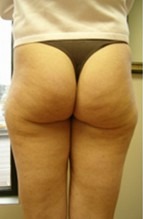
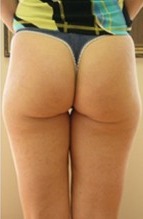
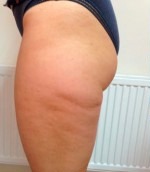
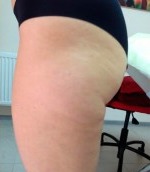
- Results and recovery times vary from person to person. The photographs show the results of specific patients and are not a promise of the same outcome.
Written by Vladimir Khegay, plastic surgeon, specializing since 2013. Education and experience · updated July 29, 2026
Book Liposuction and lipofilling
Leave your contacts — we'll call you back within the business day, answer your questions and find a convenient time for your consultation.
By clicking the button, you agree to the privacy policy. The procedure is already selected — Liposuction and lipofilling.