Otoplasty
Otoplasty is an operation to correct the shape and position of the ears and earlobes. It eliminates protruding ears, reduces an overly large ear or earlobe, and corrects injuries, deformities and earlobe tears. The operation addresses both aesthetic and functional goals and is suitable for children and adults alike: it can be performed from the age of 6, once the cartilage has fully formed.
Several techniques are used. The Mustardé method forms the antihelix of the ear cartilage, bringing the ear closer to the head. The Furnas method stitches the ear bowl to the periosteum of the mastoid process. A laser technique using a CO2 laser is also available for precise cartilage shaping. The technique is chosen according to the specific anatomy and goal.
The operation takes from 30 minutes to 2 hours, no hospital stay is needed — you can go home right away. In the first days mild swelling, pain and a brief loss of sensation are possible; a tight bandage is temporarily needed and hair washing is not allowed. The price starts from 300,000 ₸ (earlobe reconstruction and suturing). The type of anesthesia is determined at the consultation.
Who it suits and when to wait
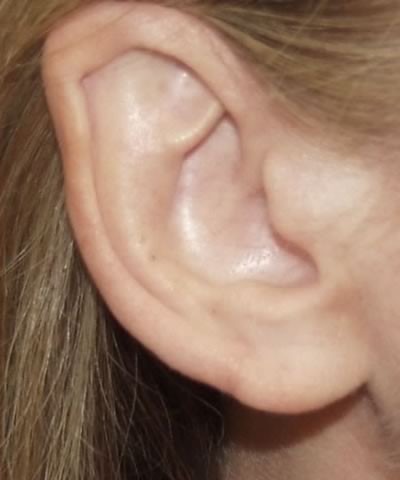
- Protruding ears — ears that stick out
- A large ear or earlobe
- Ear asymmetry
- Injuries and deformities of the ear
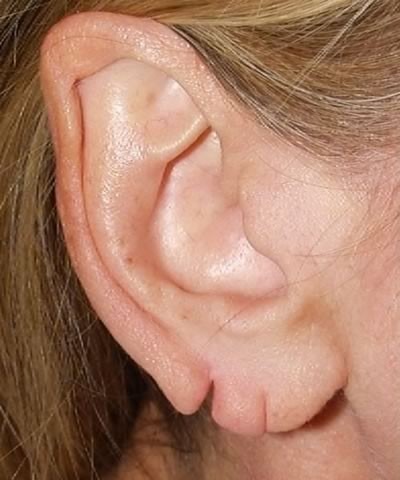
- Torn or stretched earlobe piercings
- Congenital features of the ear shape
- Age under 6 (the cartilage has not yet formed)
- Acute inflammatory diseases of the ears and skin in the surgical area
- Blood clotting disorders
- Acute infections
- Severe chronic diseases in the acute stage
- Decompensated diabetes mellitus
How it works in practice
How the operation goes
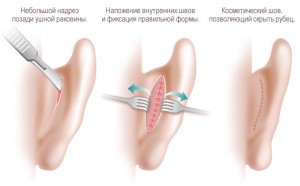
A small incision behind the ear; the surgeon places internal sutures to form the correct curve of the cartilage and finishes with a fine cosmetic suture hidden in the natural fold behind the ear.
From consultation to result
Consultation and choosing the technique
The surgeon assesses the shape and position of the ears and selects a technique — Mustardé, Furnas or laser (CO2).
Preparation and anesthesia
An examination is carried out; the type of anesthesia is chosen individually, taking the patient’s age into account.
Surgical access
Access is made behind the ear, in the natural fold, where the scar remains invisible.
Shaping the cartilage
An antihelix is formed or the ear bowl is stitched to the periosteum; with the laser technique the cartilage is shaped with a CO2 laser.
Suturing and bandaging
Sutures and a tight fixing bandage are applied, holding the ears in their new position.
How recovery unfolds
Procedure pricing
The exact cost is set at the consultation after an examination and depends on the scope of the procedure.
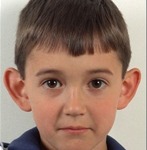
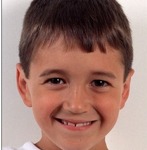
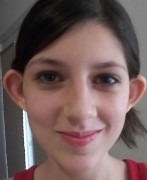
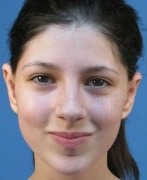
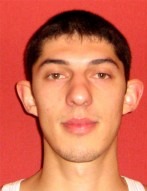
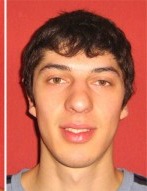
Results — Otoplasty
FAQ about Otoplasty
Otoplasty can be performed from the age of 6 — by this age the ear cartilage is already fully formed. Early correction of protruding ears is often recommended before school to avoid psychological discomfort for the child. There is no upper age limit: the operation is successfully done on adults of any age.
The Mustardé technique forms the antihelix of the ear cartilage, creating a natural curve of the ear. The Furnas technique stitches the ear bowl to the periosteum of the mastoid process, bringing the ear closer to the head. They are often combined. The choice depends on the anatomy and the cause of protrusion, and is made at the consultation.
The laser technique with a CO2 laser allows the cartilage to be shaped precisely with less tissue trauma. The laser simultaneously coagulates the vessels, which reduces bleeding and swelling. The applicability of the method depends on the goal and anatomy — the surgeon assesses whether its use is appropriate.
No, otoplasty does not require hospitalization. The operation is performed on an outpatient basis, and you can go home the same day. During the first hours the condition is monitored, after which the patient is discharged with recommendations on care and wearing the fixing bandage.
In the first days the fixing bandage is worn constantly, then the doctor allows switching to a nighttime bandage for a few more weeks. The bandage holds the ears in their new position and protects against accidental shifts. The exact regimen and timeframe are given in individual recommendations.
In the first days after surgery you cannot wash your hair, so as not to wet the sutures and bandage. The doctor will tell you when it becomes possible — usually after the first follow-up examination. Until then, the hair is washed carefully, avoiding the ear area, as advised by the surgeon.
The incision in otoplasty is made behind the ear, in the natural fold, so the scar is practically invisible. Over time it fades and hides in the fold between the ear and the head. When correcting the earlobe, scars are also placed as inconspicuously as possible.
The operation is performed under anesthesia, so there is no pain during it. In the first days moderate soreness and discomfort in the ear area are possible, which are managed with prescribed medication. The unpleasant sensations quickly decrease during the first week.
With the correct technique and adherence to recommendations, the result of otoplasty is stable and lasts for life. Wearing the fixing bandage during healing is important so that the cartilage sets in its new position. Not following the regimen in the first weeks increases the risk of shifting.
You can usually return to studies and non-physical work within a few days, taking bandage wearing into account. Full healing takes about two weeks. Contact loads and situations where the ear could be injured are avoided at first, as advised by the doctor.
Yes, if the asymmetry or deformity affects only one ear, the correction is done on one side. However, the surgeon assesses the symmetry of both ears so the result looks harmonious. Sometimes, for balance, a small correction of the second ear is also recommended.
Earlobe reconstruction restores its shape after a tear, stretching by tunnels or an injury. The damaged edges are carefully excised and sutured, recreating the natural contour of the lobe. The operation is usually performed under local anesthesia and is well tolerated, and the scar is barely noticeable.
Earlobe repair is the restoration of the lobe after stretching by tunnels or large earrings, as well as after tears. The stretched hole is excised and sutured, forming a solid lobe. After healing, a neat new piercing can be made if desired.
After earlobe repair or reconstruction, re-piercing is usually possible after a few months, once the tissues have fully healed. Piercing a repaired lobe earlier is not recommended, so as not to disrupt healing. The surgeon will state the exact timing at the follow-up examination.
Light activity is allowed after a few days, while contact sports, swimming and loads where the ear could be knocked — no earlier than a few weeks and in agreement with the doctor. Protecting the ears during healing reduces the risk of the result shifting.
In the first weeks it is recommended to sleep on your back, avoiding pressure on the ears. Sleeping on your side will be possible after the doctor’s permission. The nighttime fixing bandage helps protect the ears and keep them in their new position during sleep.
A brief loss or reduction of sensitivity in the first days is normal, linked to swelling and tissue healing. Sensitivity usually recovers completely within a few weeks. Lasting changes are extremely rare.
Yes, otoplasty is successfully performed on adults of any age — there is no upper age limit. In adults the cartilage is denser, which sometimes affects the choice of technique, but the result is equally stable. What matters is the general state of health and the absence of contraindications.
Important note on medical information
- The procedure descriptions, recovery times and prices on this page are for reference only and do not replace a consultation with a doctor.
- Every operation has contraindications. Whether surgery is possible, and by which technique and to what extent, is decided only at an in-person examination.
- Results and recovery times vary from person to person. The photographs show the results of specific patients and are not a promise of the same outcome.
Written by Vladimir Khegay, plastic surgeon, specializing since 2013. Education and experience · updated July 29, 2026
Book Otoplasty
Leave your contacts — we'll call you back within the business day, answer your questions and find a convenient time for your consultation.
By clicking the button, you agree to the privacy policy. The procedure is already selected — Otoplasty.